The sound of history humming – but what next, ‘a thief within the night’?
Matthew 24: 43

1	The sound of history humming,
	as light and matter form,
	as galaxies are clustered
	within a cosmic storm;
	philosophers imagine
	while science gathers facts,
	we reach for understanding,
	yet what we know contracts.

2	We delved beyond the present
	through interstellar gas;
	we fathom, seek to measure,
	a sub-atomic mass.
	The God that we conceive of,
	a thief within the night,
	we cannot gauge this treasure
	beyond the scale of light.

3	As yet the mystery blinds us,
	confined by birth and death,
	but human exploration
	will not discard the quest;
	as yet we live in tension:
	the only earth we know
	is where all skill and science
	must help our love to grow.

Andrew E. Pratt (born 1948)
Words © 2006 © Stainer & Bell Ltd, London, England copyright@stainer.co.uk . Please include any reproduction for local church use on your CCL Licence returns. All wider and any commercial use requires prior application to Stainer & Bell Ltd.
Metre: 7 6 7 6 D
Tune: AURELIA; VICTORY PARADE (Ian Sharp)
Tag: mystery
As we tread this Advent pathway – new poem/hymn
Travelling through Advent, a poem or, if you wish to sing, a hymn

As we tread this advent pathway – a reflective poem

As we tread this advent pathway
stepping through this mystery,
wonder fills each human heartbeat,
carves new ways through history.
Others walked this way before us,
in a different time and space,
spoke a language foreign, distant,
delving deeply through God's grace.

Now within imagination
art and science visualise
things beyond our comprehension,
truths we've yet to realise.
Here all language strains and fractures,
struggles to describe, inform
what our senses lay before us,
fail to offer shape and form.

Yet, in faith, while frail, we fumble
reaching through the mists of time,
finding still, within this season,
cosmic love, incarnate rhyme.


As we tread this advent pathway – an Advent hymn

As we tread this advent pathway
stepping through this mystery,
wonder fills each human heartbeat,
carves new ways through history.

Others walked this way before us,
in a different time and space,
spoke a language foreign, distant,
delving deeply through God's grace.

Now within imagination
art and science visualise
things beyond our comprehension,
truths we've yet to realise.

Here all language strains and fractures,
struggles to describe, inform
what our senses lay before us,
fail to offer shape and form.

Yet, in faith, while frail, we fumble
reaching through the mists of time,
finding still, within this season,
cosmic love, incarnate rhyme.
Andrew E Pratt 30/11/2024
Words © 2024 © Stainer & Bell Ltd, London, England copyright@stainer.co.uk . Please include any reproduction for local church use on your CCL Licence returns. All wider and any commercial use requires prior application to Stainer & Bell Ltd.
Metre: 8.7.8.7
Tunes: CHAPEL BRAE; SHIPSTON; STUTTGART
Choose life – a reflection on Deuteronomy 30:19 in the light of the Turkish/Syrian earthquakes
Choose life – a reflection on Deuteronomy 30:19 in the light of the Turkish/Syrian earthquakes
After the earthquakes in Turkey, Syria and the surrounding regions – What do we make of this? How do we cope? What, if anything can we do? – a donation, an offering? YES.
But let us begin at the beginning and admit that our understanding of this God and this world of which we are inhabitants, of which we are, stewards is incomplete, a mystery. God moves in a mysterious way as William Cowper wrote.
How can we live in this world.
Some would turn to the The Ten Commandments. The writer of Deuteronomy, literally Second Law, makes some suggestions, attributes them to God:
Deuteronomy 30:19
30:19 I call heaven and earth to witness against you today that I have set before you life and death, blessings and curses. Choose life so that you and your descendants may live,
These are words from the Hebrew scriptures. Could Paul, writing to the church in Corinth be speaking to us? It is for us to decide. He speaks to people who claim allegiance to different leaders
1 Corinthians 3:1-3; 9
1 And so, brothers and sisters, I could not speak to you as spiritual people, but rather as people of the flesh, as infants in Christ.
2 I fed you with milk, not solid food, for you were not ready for solid food. Even now you are still not ready,
9 For we are God’s servants, working together; you are God’s field, God’s building.
That last verse dedicates us for we are God’s servants, working together; God’s field, God’s building…
What might a prophet say to us today?
This world looks pretty awful at the moment, a mix of war and natural, disaster and we, as humanity, even if we don’t admit to it, are, in Paul’s terms, infants. We have so much to learn, beliefs to change perhaps, habits to unlearn, changes to be made. A friend of mine (Graham Adams) has written a book, Holy Anarchy. He suggests that if we look at Jesus and listen to what he says then the Kingdom we talk about and the church we have built is unimaginably far from what Jesus envisaged. So far that if we found it it would seem like Holy Anarchy compared with the ordered society and church we know.
But I’m getting ahead of myself . What do we make of earthquakes? When things go wrong we like to blame someone, to ask questions. So we blame God? Why does God allow this to happen? There is a problem, many, if not all Christians believe God created all things, this earth included. If we were to say to God ‘Why? And I’m not being irreverent. I imagine a conversation. It’s like this if the earth was a really round ball there’d be no puddles, no oceans. Moving tectonic plates make dips in the earth’s surface, raise up the mountains, made the sea in which life began, the lakes that gather water that you drink. No tectonic plates, no earthquakes, NO YOU either! So not so much God’s judgment, more providence
So lets readjust to that. Following an earthquake a still small voice cries in the darkness and the dust. And we can lay this at God’s door but not as a judgment but a necessity, We can lament at the unfairness, that is doesn’t make sense, that a loving God shouldn’t let this happen. But this is the paradox. If it wasn’t like this we wouldn’t be here. To coin a phrase, the goal-posts have been moved.
So lets begin again. ‘Natural’ things happen. They are well named. We have to live with them. This is how the world is. From here on in Deuteronomy makes sense. The comment is pertinent. ‘Choose life so that you and your descendants may live’. This is infant school to use Paul’s term. Are we ready to move on?
To do so means to start taking responsibility for our own actions and the lives of one another. That works in Turkey and Syria today, in Ukraine and over the whole planet threatened by global warming,
In each and every situation, choose life. This is the essence of being Christian, it is active love of neighbour and, hence, God. It begins in the care of a child whose mother had been killed in an earthquake. And that is not away over there, but for at least one family living in near me, a Muslim whom I addressed as brother, who hugged me on Wednesday. He looked no different from me, like Samaritan to Jew. We shared our humanity, formed a bond that transcends the different faiths to which we give allegiance. We could, of course, argue over the value of different surahs of the Qu’ran, the relative strengths of the different Gospels. As Paul put it ‘For when one says, “I belong to Paul,” and another, “I belong to Apollos,” are you not merely human?, And that is the bottom line. Merely human. And when we treat each other as such we begin to grow up and we realise that we can ‘choose life’, because every other person on this planet, however they present themselves is ‘merely’ human. If we are, again ‘God’s servants, working together; you are God’s field, God’s building’, then our attitude ought to be that of Christ whose grace was and is accepting of all.
Charles Wesley, asked himself a question, worth us asking ourselves the same question. ‘ What shall I do my God to love’?
We began with a question and we return to it. Remember
At a time of decision for the people of Israel Moses challenged them – ‘I call heaven and earth to witness against you today that I have set before you life and death, blessings and curses. Choose life so that you and your descendants may live’. (Deuternomy30: 19)
This hymn asks what choosing life might mean for us today.
1	What are the gifts we would treasure most highly:
	freedom or justice or money or wealth;
	food for the hungry, or drink for the thirsty,
	love for our children, or power, or health?

2	Once God had given a choice to the people:
	they could decide to choose life or choose death.
	They were encouraged towards life's enhancement,
	shunning the ways that would quench life and breath.

3	What does it mean for ourselves at this moment,
        challenged by God, as to what we should choose?
	What does ‘life’ mean, for each friend,
                                     for each neighbour,
        what will encourage and never abuse?

4	Now at each crisis, each time of decision,
	save us from selfishness, things that oppress;
	help us, O God, to be wise, never grasping,
	help us to cherish those things you would bless.

Andrew Pratt (born 1948)
Words © 2011 alt by the author 2022 © Stainer & Bell Ltd, London, England copyright@stainer.co.uk . Please include any reproduction for local church use on your CCL Licence returns. All wider and any commercial use requires prior application to Stainer & Bell Ltd.
alt 2022 by the author.
Metre: 11 10 11 10
Tune: EPIPHANY HYMN

What now? For you? For me?

© Andrew Pratt
Poets struggle, sculptors risk…
One gospel (Mark) doesn’t mention the birth of Jesus. The other three relate it in different ways. This has led me to reflect on the way in which different arts attempt to give expression to the nature of God.

Poets struggle with the language,
words both mystic and absurd
fail to frame the incarnation,
giving flesh to living Word.

Art constrained by expectation
will not let the colours go,
only spreading, mixing media
emulate the Spirit’s flow.

Sculptors sometimes risk the fracture,
letting stone dictate the form,
giving rise to new creation
chance God shattering our norm.

Even music caged in bar lines
lacks the freedom to expand,
till in jazz, through improvising,
rhythms stretch to new demands.

Nothing ever fixed or final,
way beyond the human mind:
mystery and imagination…
all that we will ever find…
© Andrew Pratt Written 17/12/2022

Incarnation – Watercolour © Andrew E. Pratt
In reflective mood
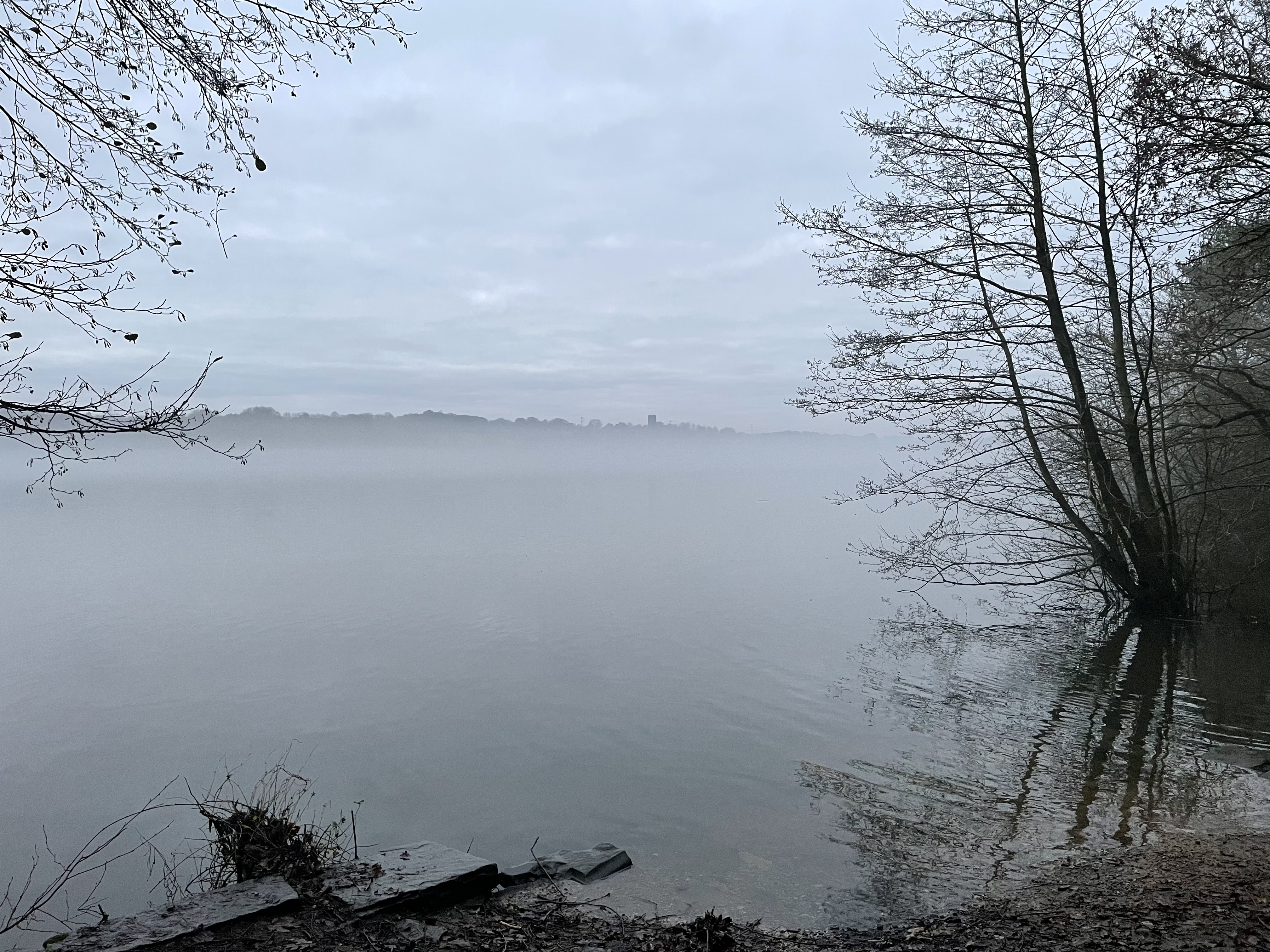
Marbury Park Northwich 16/12/2021
 hymnsandbooks