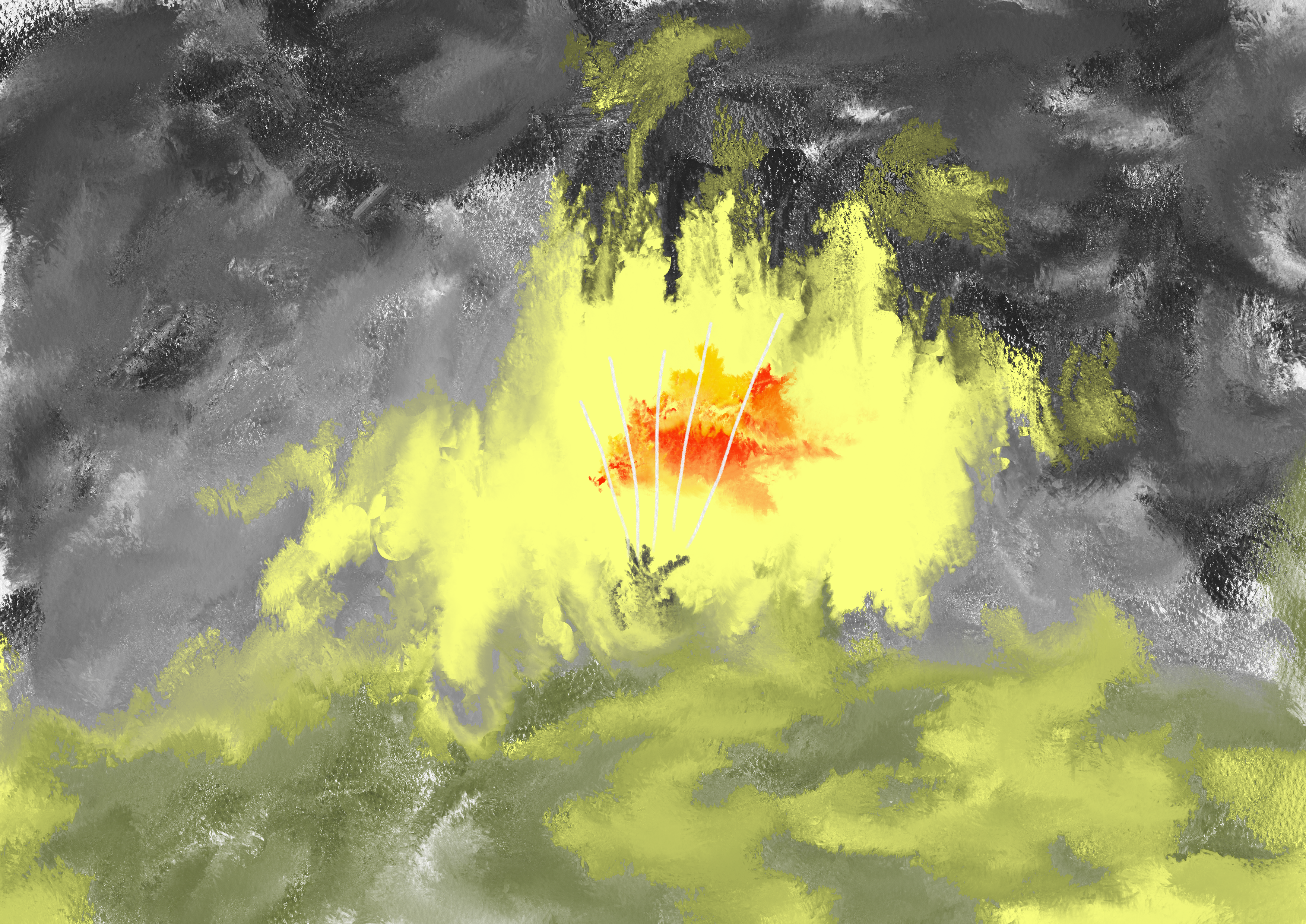
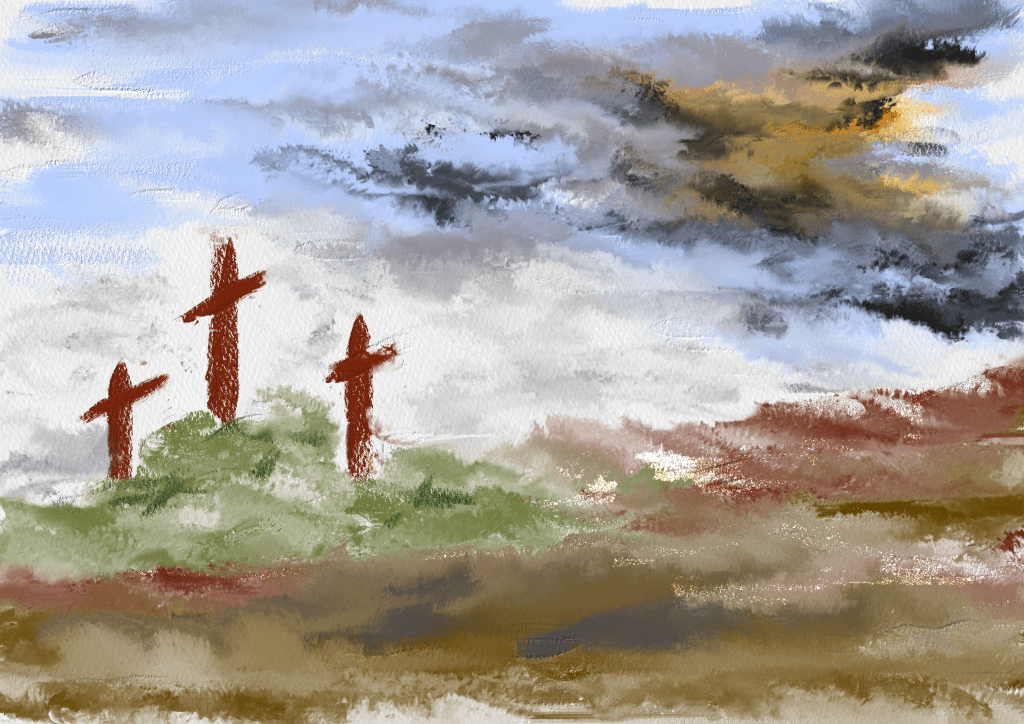
No royal robes, but donkey riding
1 No royal robes, but donkey riding,
the Christ, our King, had come to town,
Jerusalem came out to meet him.
Would gold or thorns compose a crown?
2 The people spread their palms before him,
they wondered what this day would bring:
as Jesus, humble, riding quietly
brought contrast to the praise they'd sing.
3 The ones who'd shared these years had answers,
but even they could get it wrong.
So many tensions, tangled, threaded
brought notes of discord to their song.
4 But soon the world would be confounded,
the tables turned, the structures torn,
till only those fired by God's spirit
could meet this crisis, be reborn.
5 And if within imagination
we walked within that crowd today,
would we withstand the world's derision,
to stay with Christ, or turn away?
Andrew E Pratt (born 1948)
Words © 2012 © Stainer & Bell Ltd, London, England copyright@stainer.co.uk . Please include any reproduction for local church use on your CCL Licence returns. All wider and any commercial use requires prior application to Stainer & Bell Ltd.
Metre: 9 8 9 8
Tune: ST CLEMENT
Category: worship
What can we sing in a distorted world? – Written for ArtServe and originally published in the Methodist Recorder (March 2024)
What can we sing in a distorted world?
Language and music are taut and strained. How can we compress into a phrase a modern pieta, or a father cradling body parts?
What can we sing?
We stand in the rubble of a distorted world where dust never settles, light filters through, flickering, faulted. Shadows lengthen.
Creation is cloaked by human action, or indifference.
And, again, what can we sing?
Perhaps we should be silent?
It has been said that there can be no poetry after Auschwitz. And we turn up on Sunday morning to offer praise and thanksgiving or, expecting a still, small voice, a gentle stroll beside still waters. Have we forgotten? Perhaps. Or are we too young? Since October the seventh our slumbering memories have been re-awakened. And what do we sing? At times like these I wonder at the inability of our Christian churches to lament. Its absence in these times should shock.
I turn to two Psalms, one communal; one individual.
Psalm 137
By the rivers of Babylon—
there we sat down and there we wept
when we remembered Zion.
The nearest we get to these words, a reprise of Boney M singing ‘By the rivers of Babylon’. Notice they never use verses 8 and 9:
Happy shall they be who pay you back
what you have done to us!
Happy shall they be who take your little ones
and dash them against the rock!
Like a hybrid car shifting gear they move to something more comfortable: May the words of my lips and the meditation of my heart…’ They want something deemed ‘acceptable’.
Think of the horror of war, images that can’t be broadcast for what they portray. What would we feel? Might we not want vengeance? This Psalm says that such emotions are legitimate, human. How can we admit this in our churches? We need to know that we are still held by God when we have witnessed acts of deepest hatred and want to hit back, to wreak havoc.
But a warning. The Psalmist grasps this yet it can never be a justification for repeating the horror, simplistically, ‘because the Bible tells us so’. An ‘eye for an eye, a tooth for a tooth’ should be consigned to the past.
Psalm 22
‘My God, my God, why have you forsaken me’.
This is personal, now. The cry we hear from the cross, from the lips of Jesus, words of a Psalm uttered in desperation in the throes of death: words just for Good Friday? They are strong enough for a hymn writer to pen: ‘the Father turns His face away’. And sometimes it feels like that. Yet God does not turn away, will not leave us in distress. Nevertheless, we may still feel the reality of personal desolation. If the Psalmist felt this emotion, and Jesus expressed it, then it is common to humanity and not to be condemned. It is cry of wretchedness though not a matter of doubt, rather of supreme faith. That is the foundation lament, a certainty of the presence of God with us in spite of all, even in persecution or impending death. We only complain when our expectations are not met – a train is late, food has gone mouldy, a friend lets us down. In faith we have expectations of God, God with us, always, in every circumstance or situation. Yet sometimes we feel desolate, abandoned, as though God has gone away. And then we too can lament, we can groan from the depths of our being. And at such times we utter the deepest, most sincere prayer we may ever voice, ‘God help me!’ This is no blasphemy, but a heartfelt, visceral cry of need undergirded by a subconscious sense that when all else is absent, there is a name on whom we can call.
So what music, what language, can we borrow, can we use? Perhaps Gorecki’s Third Symphony? Or a hymn like this? – ‘When loneliness oppresses me’ from Hymns of Hope and Healing/Unravelling the Mysteries sung, maybe, to KINGSFOLD?
1 When loneliness oppresses me;
when darkness fills my soul;
when grief and weeping overwhelm
and none can make me whole;
in angry fear I call to you.
When will you hear my cry?
This heavy burden on my heart
must lift, or else I die.
2 When close companions melt away,
afflictions have no end,
I cry for help to empty air,
darkness my only friend.
O God, why have you left me here?
When will my troubles cease?
If you refuse to hear my prayer,
how will I find release?
Hymn - Marjorie Dobson
© Copyright 2012 Stainer & Bell Ltd, London, www.stainer.co.uk. Used by permission. All rights reserved.
A hymn for a time of decision – Two ways or more – Written for Comberbach Methodist Church
Two ways or more to risk or rupture faith,
this pearl, this gift, entrusted to our care,
Which way to take, the smooth way or the rough
a challenge and a question hover there.
We wonder and we wander through our thoughts
as all seems foreign, different from our hope.
The ground is shaken, all seems insecure,
where can we sow a seed that fosters hope?
Help us, good God, to see the way ahead,
to take the risk that leads us from the night.
To plant while not yet knowing what might grow,
surprising, thrusting, blindly into light.
Andrew Pratt 12/3/2024 For Comberbach Methodist Church at a time of decision.
© 2024 Stainer & Bell Ltd, London, England copyright@stainer.co.uk .
Please include any reproduction for local church use on your CCL Licence returns.
All wider and any commercial use requires prior application to Stainer & Bell Ltd
Metre10.10.10.10
Tune: MORECAMBE
Betrayal…Holy Week

Holy Week – Betrayal – copyright Andrew Pratt 2024
A troubled soul – a hymn for Lent 5
A troubled soul, the Christ of God – inspired by John 12: 20-33
1 A troubled soul, the Christ of God,
humanity exposed,
with all the turmoil that we feel,
when choices are proposed.
The monumental choice he faced,
the crisis must be met,
to take the path of love to death,
or turn away, forget.
2 The riddle of the grain of wheat
was told with fear and dread,
yet mention of new fruit gives hope
that God might raise the dead.
The loss of life, the gain of life
are tangled in this game,
yet those who live in love of God
are held within love's frame.
3 So Jesus chose and we must choose,
which path we are to take,
the one which will deny God's love
or cause the earth to quake.
God give us courage to deny
the self that harbours hate,
to trust in your eternal grace,
before it is too late.
Andrew E Pratt (born 1948)
Words © 2012 Stainer & Bell Ltd, London, England copyright@stainer.co.uk . Please include any reproduction for local church use on your CCL Licence returns. All wider and any commercial use requires prior application to Stainer & Bell Ltd.
Metre: DCM
Tune: ELLACOMBE